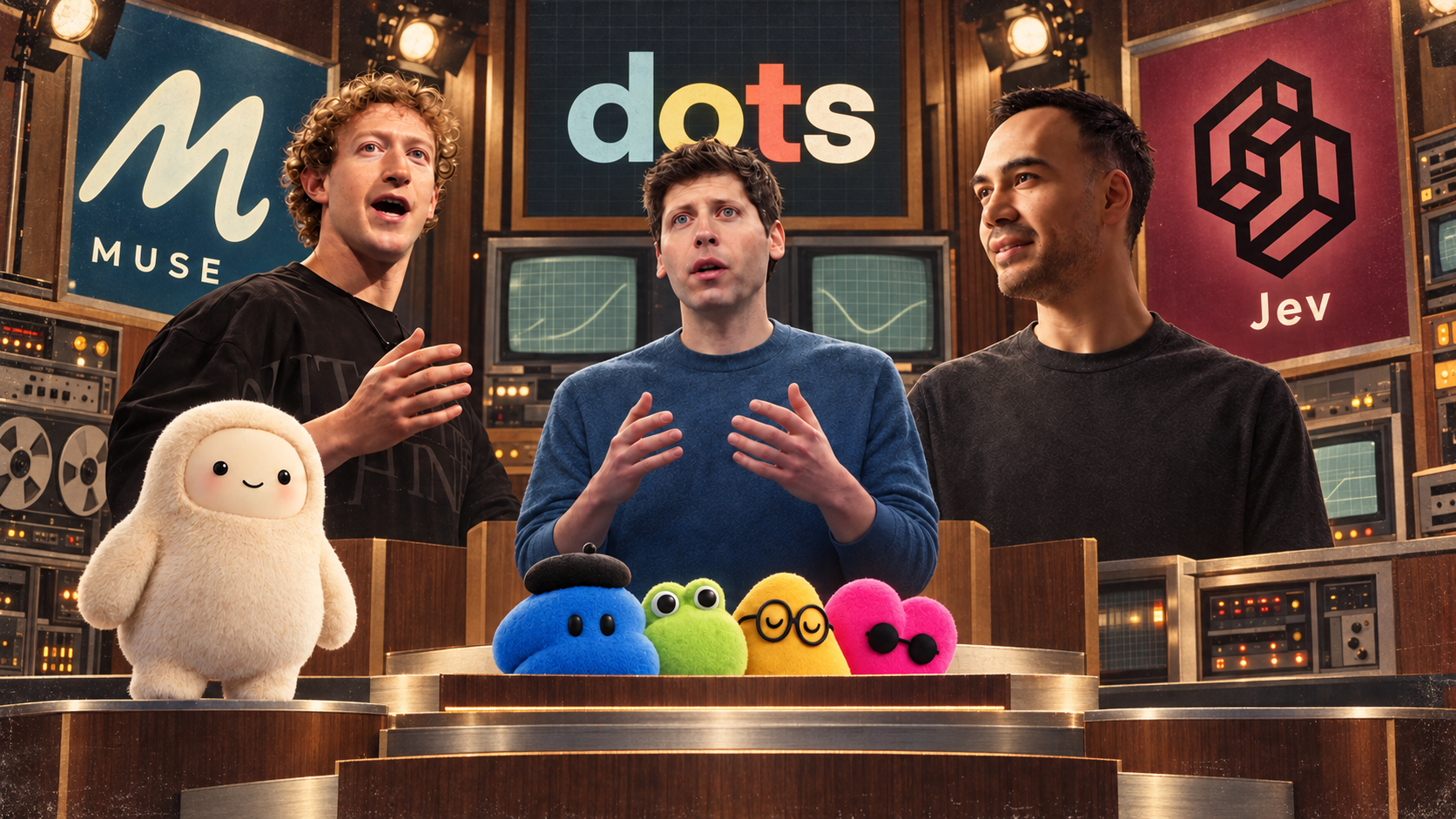
Three of the biggest AI releases this month landed within two weeks of each other.
September 15: TypeSafe launched Jev, a decision engine that returns every answer with a confidence score, then kicks the call up to a human the moment it isn't sure.
September 29: OpenAI announced Dots, always-on agents where the very first thing you do is tell it what it can handle alone, what needs your sign-off, and what it can never touch.
Same day: Meta shipped Muse for Small Business, a free agent that plugs into the tools a business already runs on, QuickBooks included, and produces work the owner confirms.
Now look at what these three actually share. It isn't the automation. Everyone has automation now. It's that all three put the human approval step at the dead center of the product, on purpose.
The valuable part of an AI system used to be how much it could do without you. That flipped this month. Now the valuable part is how cleanly it can hand you the one decision that actually needs a human. The work is cheap. The judgment is the product.
There's a name for the model all three of these just validated. It's the one we've been building on for a year: approve, don't produce. Here's what it means, and why it should change what you build next.
Two ways to run a business on AI
Every business putting AI to work is choosing one of two models, whether they've named it or not.
The first is Produce. You (or your team) sit at the machine, prompt it, wait, read what comes back, fix it, prompt again. The AI is a faster typist. You are still the operator, doing the work, just quicker. This is where most people are stuck: the tool got better and somehow the day got busier.
The second is Approve. The AI does the work on its own schedule, overnight, in the background, and brings you finished output. Your job shrinks to one thing: yes, no, or change this. You stopped producing. You started approving.
Here's the split laid out:
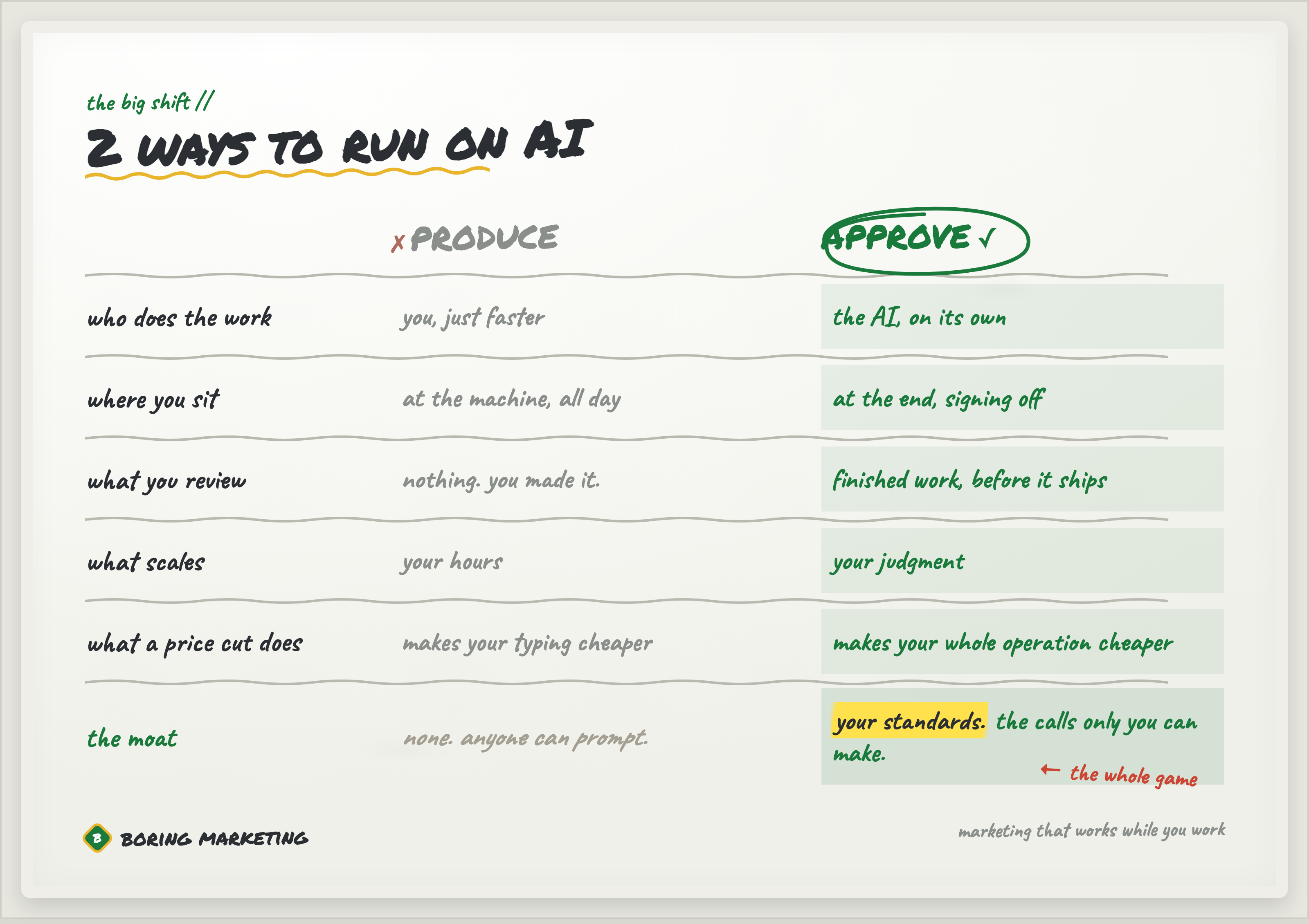
That last row is the whole game. In a Produce world, a cheaper model just means everyone generates the same average output a little faster. In an Approve world, the cheaper the model gets, the more work flows through your judgment, and your judgment is the one thing a competitor can't download.
The proof it's already happening
This isn't a prediction. In the last 30 days, three of the most-watched teams in AI all shipped products built around the approve step. Different layers of the stack, same bet.
Jev (TypeSafe, September 15). A decision engine, not a chatbot. You feed it a question, it returns an answer with a confidence score in under half a second, and when that confidence is low it escalates to a human instead of guessing. The sign-off isn't bolted on the side, it's wired into how the thing works. Vercel swapped Jev in for a safety check and reported it running 5 to 18 times faster than the model it replaced.
Dots (OpenAI, September 29). Always-on agents that connect to more than 4,000 apps and run on their own machines. The first thing OpenAI has you do when you set one up is draw the boundaries: what it can do alone, what needs your approval, what it must never touch. Their own line for it is "they bring you work done the way you would do it, sometimes before you even think to ask." That's finished work, waiting on your yes.
Muse for Small Business (Meta, September 29). A free agent that plugs into QuickBooks, Shopify, Slack, and the rest of the stack a local business already runs on, then produces the work for the owner to confirm. Meta gave that connector layer away for free the same week, which tells you what they think the value isn't. It was never the plumbing. It's the finished output you approve.
Three different companies reached the same design decision within two weeks, without coordinating.
And the operators who run real businesses are already telling you which model they want. In a ServiceTitan survey of more than 1,000 contractors this month, 61% said they want AI built into the tools they already use, not a separate app they have to go run. Only 11% said they deeply trust AI tools to operate on their own. Read those two numbers together and you get the exact shape of Approve: do the work for me inside what I already have, and leave me as the one who signs off.
How to move from Produce to Approve
You don't need to build an agent from scratch to get on the right side of this. You need to move one job at a time out of Produce and into Approve. Here's the order that works.
Pick the work you already redo every week. Review replies, appointment follow-ups, the same handful of social posts, updating your hours on Google. Boring, repetitive, and it never stops. That's the work AI should be doing overnight, not the work you grind through at 6pm.
Have it produce the finished thing, not a draft you still have to finish. A half-done draft you have to rewrite is just Produce wearing a costume. The point is that it comes back done, in your voice, ready to ship. If you're rewriting it every time, the system isn't built right yet.
Keep yourself as the one gate that matters. Nothing goes out until you approve it. Your standards are the product, and the review is where they get stamped on the work. That stamp is what customers actually pay for.
Write down every correction. Every time you change something before approving it, that's a rule. Save it, feed it back in. Over a few weeks your "no" becomes the AI's default, the work keeps landing closer to what you'd have done yourself, and the approvals get faster.
Do this and your day flips. Instead of spending the morning making marketing, you spend ten minutes approving a night's worth of it. The work still has your name on it. You just stopped being the one who has to type it.
This is the whole idea behind what we're building at Boring Marketing. It connects the tools you already use, does the marketing work overnight, and hands it to you in one dashboard to approve in the morning. No AI to learn. No agency to hire. The name is the promise: it should be boring, and it should just run.
From the community
Want to see the Approve model running in a real business right now? One of our members just walked the whole community through his.
This week, James Pasmantier (founder of NimbleDraft) ran a mentor session, From AI Answer to AI Operator: Persistent AI Agents and What It Takes to Run One. It's the cleanest live example of everything above.
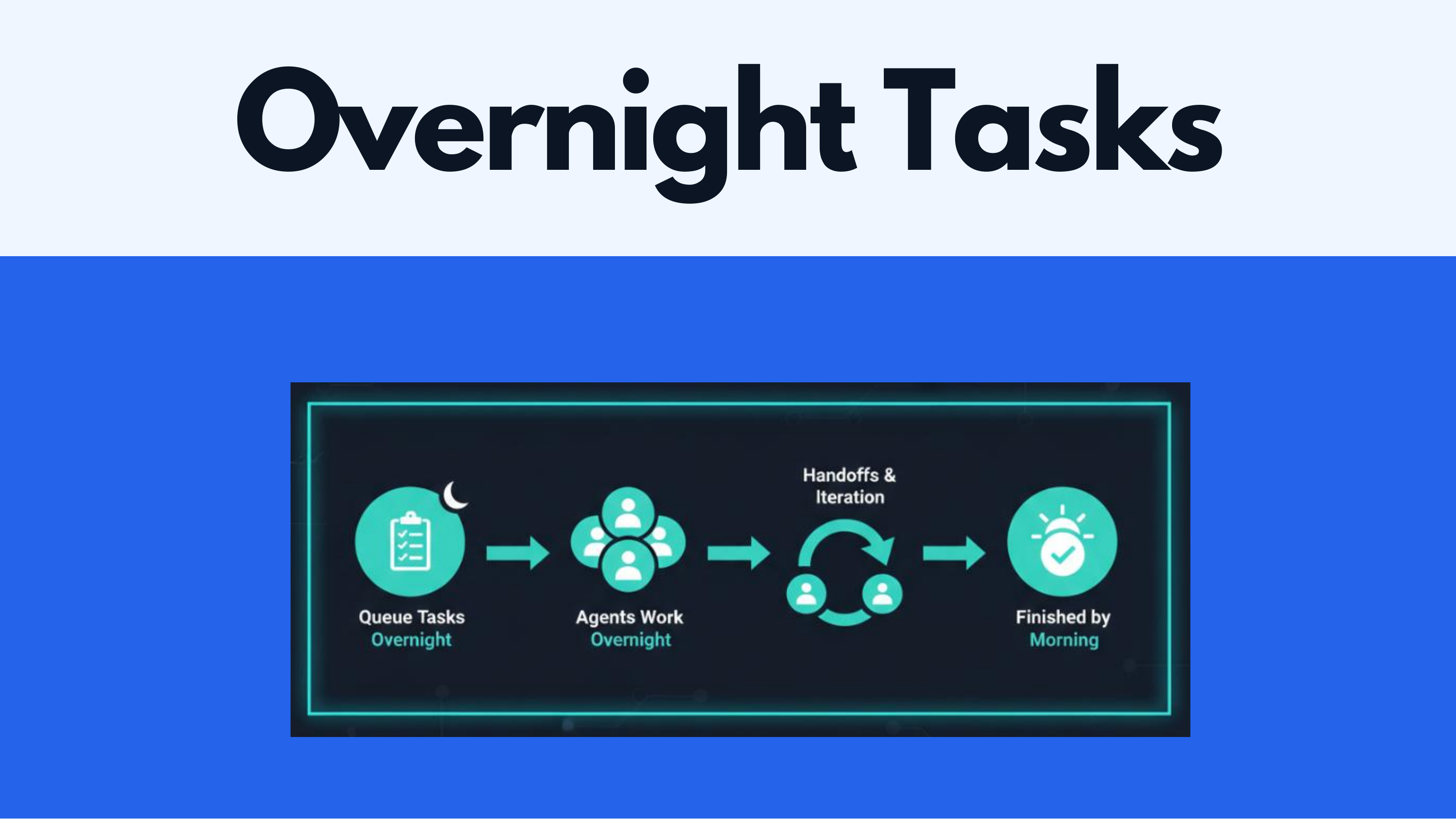
His whole setup, which he calls OpenClaw, runs on one loop: he queues tasks at night, a team of agents works them overnight, they hand off and iterate on each other's output, and the finished work is waiting for him by morning. He doesn't produce it. He reviews it over coffee.
A few highlights from the session:
The advisory board model. The agents are the employees. A layer of "advisors" sits above them like mentors, shaping how the agents think before they act. It splits the brain (figuring out what to do) from the hands (executing it).
Four jobs he's already handed off. Content pipeline, competitive intel, content repurposing, and scheduled competitive monitoring that only pings him when something actually needs a human.
Guardrails first. A big chunk of the session was on keeping the whole thing from running wild, the unglamorous part that makes "approve, don't produce" safe to run in a real business.
The full session (replay, slides, his Agent Architecture Guide, and his Security and Guardrails Checklist) lives inside the community. If you want the playbook and not just the highlights, that's where it is.
The tools will keep getting cheaper and faster. That part is handled. The question that's left is the one only you can answer: what are you willing to put your name on? Build the system that brings you that question every morning, and let it handle everything up to it.
A business where you produce is a job. A business where you approve is an asset.
Miscellaneous vibes
Meta shipped Muse for Small Business, free, connecting QuickBooks, HighLevel, Shopify and more
ServiceTitan's 2026 State of AI in the Trades: 61% want AI inside tools they already use, only 11% deeply trust standalone AI
Jev, TypeSafe's "System One" decision model that escalates to a human when it isn't sure
OpenAI's Dots and the always-on agent everyone's talking about
A stranger can now edit your Google Business Profile, and it auto-publishes in 4 days if you don't respond
Google Ads now says Smart Bidding needs ~50 conversions to calibrate, which most local accounts never hit
Aleyda's new SERP-squeeze series shows the squeeze happening with no AI Overview in sight
That's the lesson this week. The work is getting automated whether you set it up or not. The only real choice is whether you're the one approving it, or the one who got out-run by someone who did.
Go move one job from Produce to Approve this week. Then hit reply and tell me which one. I read every response.
Keep it boring,
James
P.S. If someone you know still spends their mornings making marketing by hand, forward this to them. That's the whole favor.